

To improve your website conversion rate, your dental website must make it easy for patients to call, book, or complete an appointment form.
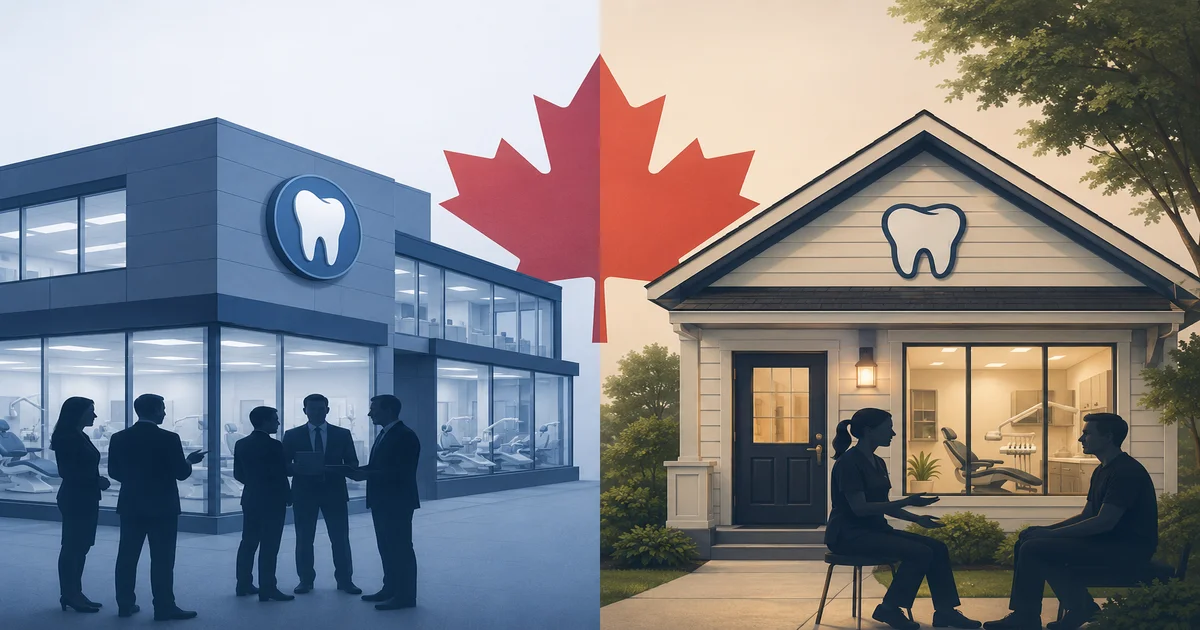
Imagine Northview Example Dental Clinic receives hundreds of visitors but very few bookings, while Lakeside Sample Dental Clinic receives less traffic yet consistently converts visitors into patients.
A website that is not working usually has one of two problems: it either lacks enough traffic or the traffic arrives but does not convert.
This guide explains how to identify the problem and turn more visits into booked appointments. For a better understanding, we will talk about two hypothetical clinics.
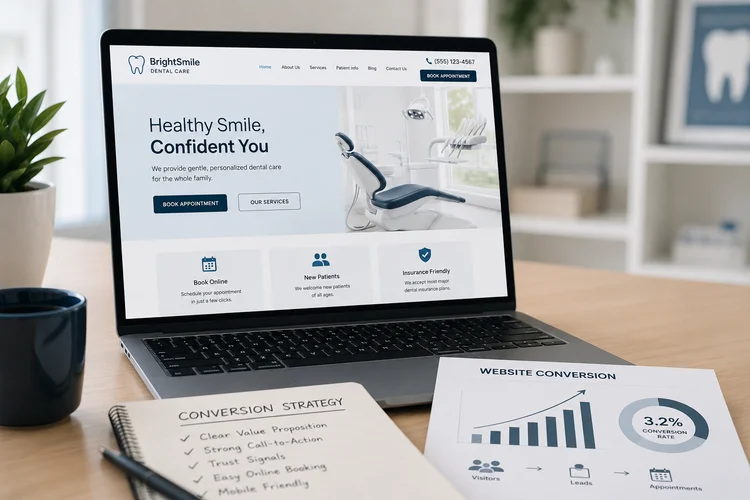
First, Diagnose: Traffic or Conversion?
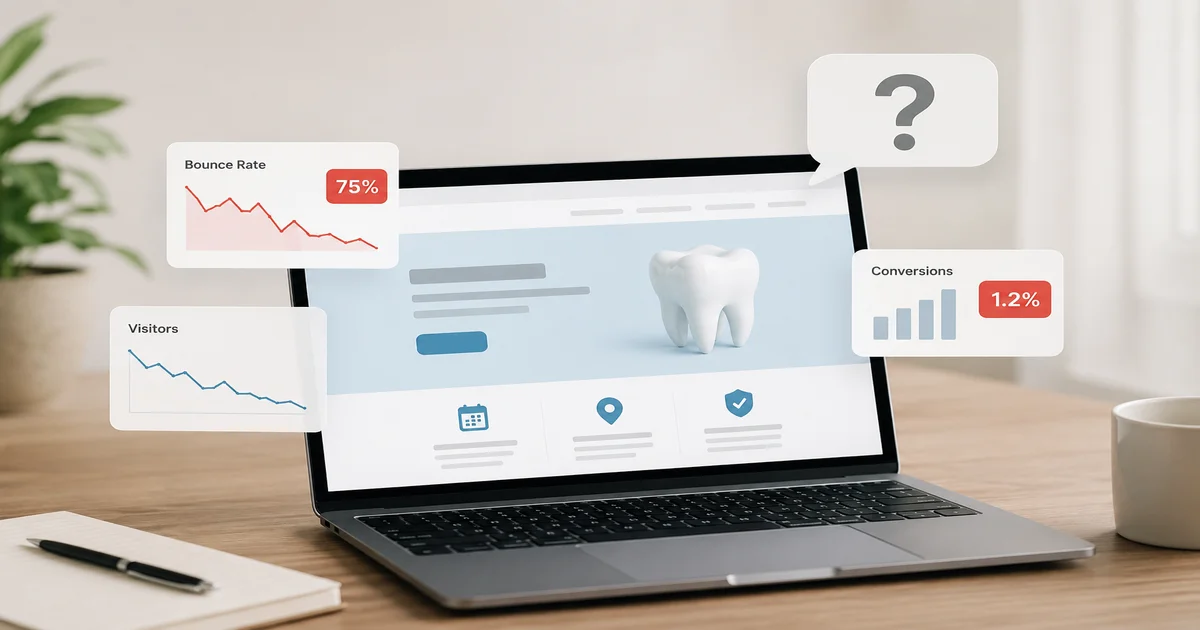
Before fixing your dental website, first identify whether the problem is traffic or conversion. A website with many visitors but few calls, forms, or bookings has a conversion problem. A website with very little traffic has a visibility problem and needs stronger SEO or advertising.
1. Northview Example Dental Clinic receives 1,500 monthly visitors but only a few calls and appointment requests. The issue is not traffic; patients are finding the clinic, but the website is not encouraging them to take action.
2. Lakeside Sample Dental Clinic receives fewer than 100 monthly visitors. In this case, improving conversion alone will not create enough new patients because the clinic first needs more visibility.
Check your Google Analytics data and compare website visitors with calls, forms, online bookings, and completed appointments. If your traffic is healthy but patient actions are low, focus on improving your website conversion rate.
For clinics that need more visibility, explore our Dental SEO and Dental PPC services.
Why Dental Websites Fail to Convert
A dental website can lose potential patients for many small reasons. Even when visitors are interested in your services, they may leave if the website is slow, difficult to use, unclear, or does not make booking simple. These are some of the most common conversion problems dental clinics face:
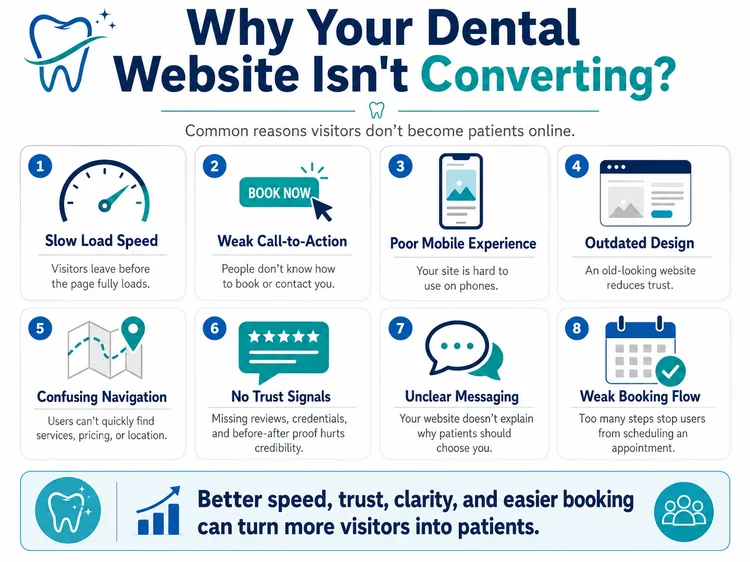
1. Slow Load Speed
Patients searching for a dentist usually want quick answers. If a dental website takes too long to load, visitors may leave before seeing your services, reviews, or appointment options. Improving page speed helps create a smoother experience and gives patients a better reason to stay.
2. Weak Call-to-Action
A patient may be ready to book, but if the website does not clearly show what to do next, they may leave. Clear call-to-action buttons such as “Book an Appointment” or “Call Our Clinic” help guide visitors toward becoming patients.
3. Poor Mobile Experience
Most patients search for dental services from their phones. If the website is difficult to navigate, requires zooming, or has buttons that are hard to click, visitors may choose another clinic with a better mobile experience.
4. Outdated Design
An old-looking website can reduce patient confidence before they even contact the clinic. Modern design, real clinic photos, clear information, and an easy layout help create stronger trust.
5. Confusing Navigation
Patients should be able to quickly find important information, such as dental services, location, hours, pricing, insurance details, and booking options. If visitors have to search through multiple pages, they are more likely to leave.
6. No Trust Signals
Patients want proof that they are choosing the right dentist. Missing Google reviews, dentist credentials, patient testimonials, and real clinic images can reduce credibility and make visitors hesitate.
7. Unclear Messaging
A website should immediately explain why patients should choose your dental clinic. Generic messages like “Welcome to our practice” do not communicate what makes your clinic different, whether it is emergency care, family dentistry, experience, or convenient appointments.
8. Weak Booking Flow
Even interested patients may abandon the process if booking requires too many steps. A simple online booking system, visible phone number, and easy contact process help turn website visitors into appointments.
For example, Northview Example Dental Clinic may lose an emergency patient because there is no clear click-to-call button or the booking process is difficult to complete. Lakeside Sample Dental Clinic creates a better experience by making Google reviews, office hours, insurance information, and appointment options easy to find.
A professional dental website and marketing strategy should remove these barriers and guide each patient toward one clear next step.
How to Improve Your Website Conversion Rate
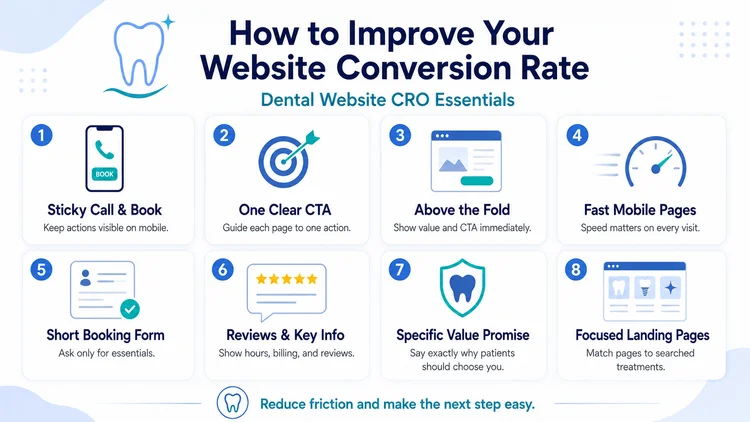
Improving a dental website conversion rate does not always require a complete redesign. The goal is to reduce friction, answer the patient’s immediate questions, and make the primary call to action easy to find.
- Add sticky click-to-call and booking buttons: Keep a phone and online booking option visible on mobile devices so patients can act without searching through the page.
- Use one clear primary CTA per page: Each dental service page should guide visitors toward one main action, such as booking a consultation or calling the clinic.
- Place the main action above the fold: Patients should see the booking button, phone number, and value proposition before they scroll.
- Create fast, mobile-first pages: Improve page speed and Core Web Vitals so treatment pages load quickly on phones and do not lose impatient visitors.
- Shorten the booking form: Ask only for essential information, such as the patient’s name, phone number, preferred service, and appointment time.
- Display reviews and practical information clearly: Place Google reviews, opening hours, new-patient information, insurance direct billing, and CDCP details where patients can find them quickly.
- Write a specific value proposition: Replace generic text with a useful promise such as “Same-day emergency dental appointments in North York” or “Evening family dental appointments in Toronto.”
- Use focused landing pages: Send implant, Invisalign, emergency dentistry, and whitening visitors to dedicated pages that match the service they searched for.
After making these changes, use A/B testing to compare different CTA wording, button placement, landing page layouts, and booking forms. Northview Example Dental Clinic might test “Request an Appointment” against “Book Your Visit,” while Lakeside Sample Dental Clinic could compare a short form with a longer consultation form.
Tracking these changes allows your clinic to see which version creates more calls and bookings. It also helps confirm that your marketing return on investment is moving in the right direction. Learn more about connecting patient value to marketing performance in our guide on how to calculate ROI for SEO.
Conclusion
A dental website can receive traffic and still fail to generate patient appointments when the booking process is unclear, the call to action is difficult to find, or essential trust information is missing. By first separating traffic problems from conversion problems, your clinic can invest in the correct solution rather than making random website changes.
CMC Marketing Agency has more than 18 years of experience helping dental clinics improve websites, patient acquisition, and marketing ROI. For a professional review of your dental website and its conversion barriers, call (866) 405-3006 or visit our dental marketing service page.
FAQ
These answers address common questions dental clinic owners and managers ask when their website receives visitors but does not generate enough calls or online bookings.
What is the fastest fix to increase conversions?
The fastest improvement is usually adding a visible click-to-call button and a simple online booking option above the fold. These changes remove immediate barriers for patients who are already ready to contact the clinic.
Why is my website getting traffic but no calls?
Your website may have an unclear call-to-action, weak trust signals, hidden contact information, slow page speed, or a complicated booking process. Visitors need a clear reason and an easy way to contact your dental clinic.
What is a good conversion rate for a dental website?
A good conversion rate depends on the traffic source, treatment type, location, and what your clinic counts as a conversion. The more important measure is whether calls, forms, and online bookings are increasing consistently from qualified dental visitors.
How long does it take to improve a website’s conversion rate?
Basic changes such as improving the CTA, shortening forms, and adding click-to-call can produce results within weeks. Larger improvements involving page speed, landing pages, content, and mobile design may take longer to test and refine.
Does page speed really affect conversions?
Yes. Slow pages frustrate mobile patients and increase the chance that they will leave before calling or using online booking. Faster page speed creates a smoother experience and supports a stronger conversion rate.