

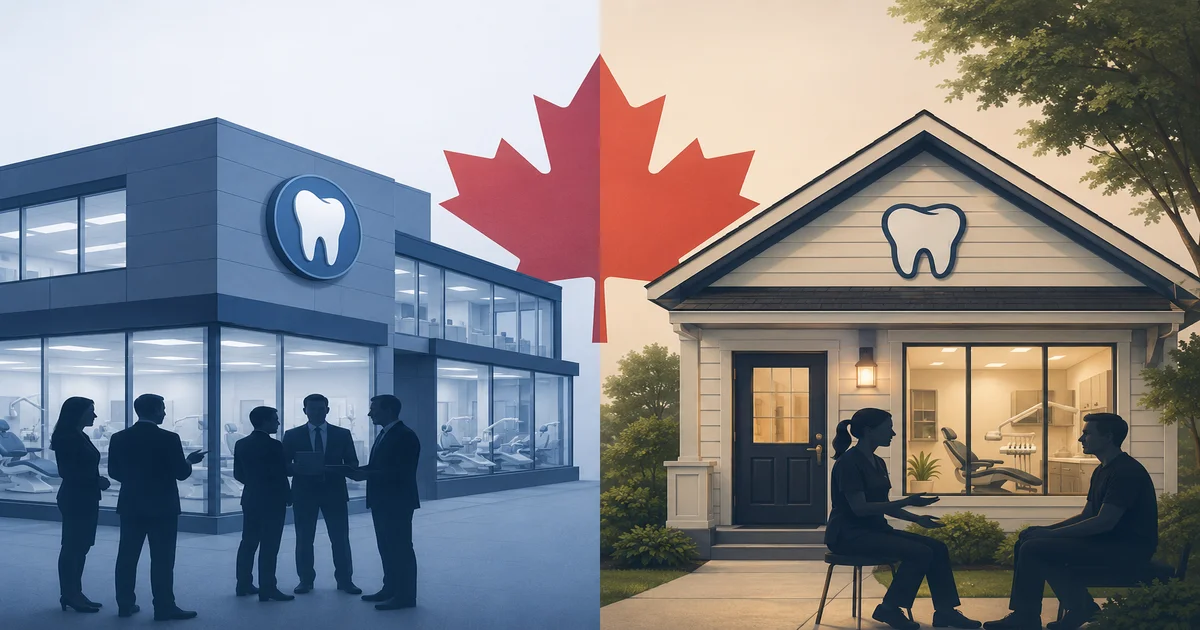
DSO vs private practice comes down to support versus control. A DSO-affiliated clinic receives centralized business support, while a private practice is owned and managed independently by a dentist.
Neither model is automatically better. The right choice depends on clinical autonomy, administrative workload, income goals, access to resources, and long-term exit plans.
What Is a Dental Service Organization (DSO)?
A Dental Service Organization provides non-clinical support to affiliated dental practices. Depending on the agreement, this support may include human resources, payroll, billing, compliance, procurement, marketing, technology, recruitment, and financial reporting. The purpose is to let dentists spend less time operating the business and more time treating patients.
DSO structures are not all identical. A dentist may work as an associate, sell some or all of a practice, retain equity, or enter a partnership arrangement with the organization. The dentist’s income, responsibilities, decision-making power, and future exit options depend heavily on the specific contract.
In Canada, the DSO normally supports the business side of the clinic, while licensed dentists remain responsible for clinical care and their professional obligations. Ownership rules also vary by province. In Ontario, for example, voting shares in a dentistry professional corporation must remain within the permitted professional ownership structure, and dentists remain accountable regardless of arrangements with outside organizations.
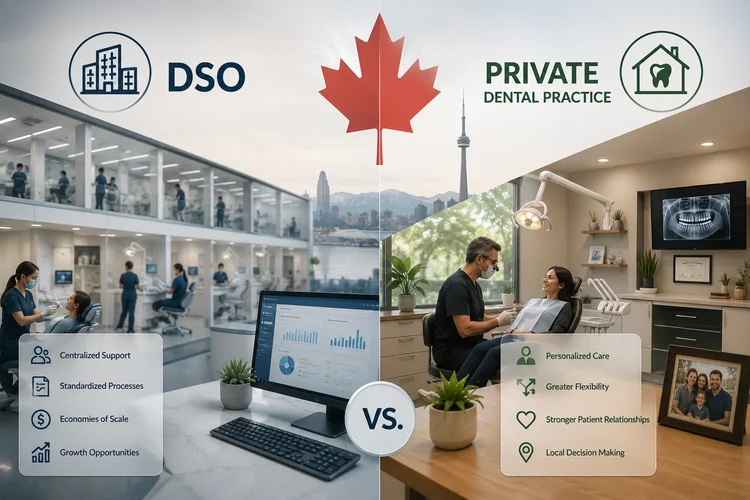
This centralized support may include recruitment, billing, compliance, technology, and dental marketing, allowing dentists to focus more of their time on patient care.
What a Private Practice Means
A private dental practice is independently owned and operated by one or more dentists. The owners control the clinic’s finances, staffing, marketing, technology, patient experience, and long-term strategy while remaining directly responsible for clinical decisions.
This model offers greater freedom to shape the practice around the dentist’s preferred culture and style of care. The owner can decide which treatments to prioritize, which technology to purchase, how to compensate the team, and how quickly to expand.
That independence also brings a heavier workload. A private owner must oversee recruitment, payroll, compliance, insurance, scheduling systems, marketing, equipment purchases, and financial performance. These responsibilities can be delegated to employees or external providers, but the owner remains responsible for coordinating them.
The owner also carries more financial risk. However, a successful private practice allows the dentist to retain its profits, build equity in the business, and decide when, how, and to whom the practice will eventually be sold.
Read more: How to Optimize Your Google Business Profile as a Dentist
The Core Differences That Matter
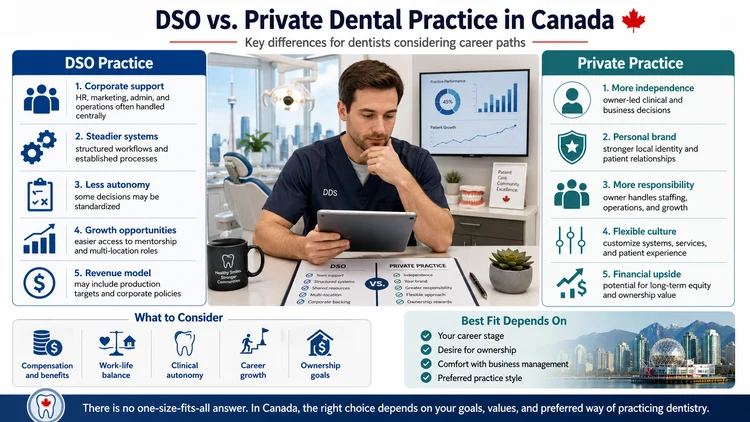
The practical differences between a DSO-affiliated clinic and a private practice are not limited to ownership. They affect how the dentist works, earns, invests, makes decisions, and plans an eventual exit.
| Factor | DSO-affiliated | Private practice |
|---|---|---|
| Ownership | Shared, partnered, sold, or DSO-supported structure | Dentist-owned |
| Clinical autonomy | Usually retained, but contract terms matter | Broad owner control |
| Admin & compliance load | Centralized operational support | Managed by the owner and team |
| Income model | Salary, production, sale proceeds, or equity | Practice profits and equity growth |
| Technology & CE access | Network-supported purchasing and training | Selected and funded by the owner |
| Exit / sale flexibility | Subject to contract, earn-out, and partnership terms | Owner controls sale and succession |
A DSO can be attractive to dentists who want operational support, access to technology, professional development, purchasing power, and less responsibility for daily administration. It may also give a retiring owner a structured exit while allowing them to continue practising for an agreed period.
Private practice may be more suitable for dentists who value independence, want full control over the clinic’s culture, and are willing to manage the risks and responsibilities of ownership. It can offer greater flexibility and financial upside, but those benefits depend on the dentist’s ability to operate the practice successfully.
Private dental practices can also compete with larger DSO networks by building stronger local visibility. Investing in professional dental SEO can help an independent clinic rank in Google, attract nearby patients, and grow without giving up ownership.
The most important point is that neither label tells the full story. Some DSO agreements preserve considerable clinical independence, while others impose tighter operational or financial expectations. Dentists considering affiliation or a sale should review decision rights, compensation, restrictive covenants, earn-out conditions, clinical protections, and exit terms with experienced legal and financial advisers.
Whether your clinic remains independent or joins a dental group, it still needs a clear strategy for attracting and retaining patients. CMC Marketing Agency has more than 18 years of experience helping dental practices strengthen their visibility and patient acquisition. Visit our Dental Marketing service page or call (866) 405-3006 to discuss your clinic’s growth.
FAQ
The following questions address common concerns Canadian dentists have when comparing DSO affiliation with independent practice ownership.
Are DSOs common in Canada yet?
Yes. National and regional dental networks have become increasingly visible in Canada, and regulators such as the RCDSO have been examining emerging corporate practice models. However, independent and dentist-owned group practices remain an important part of the Canadian dental market, and not every multi-location group is a DSO.
Can a dentist keep clinical control inside a DSO?
Often, yes, but it depends on the agreement. The dentist remains professionally responsible for patient care, while the DSO is generally expected to manage non-clinical functions. Dentists should confirm that the contract clearly protects their authority over diagnosis, treatment planning, materials, referrals, and standards of care.
Is it better to sell to a DSO or stay independent?
Selling to a DSO may suit an owner who wants liquidity, administrative relief, access to centralized resources, or a planned transition out of ownership. Staying independent may be better for a dentist who values full control, wants to retain future practice growth, and is comfortable managing the business. The better choice depends on the valuation, contract terms, tax consequences, personal goals, and desired level of involvement after the transaction.